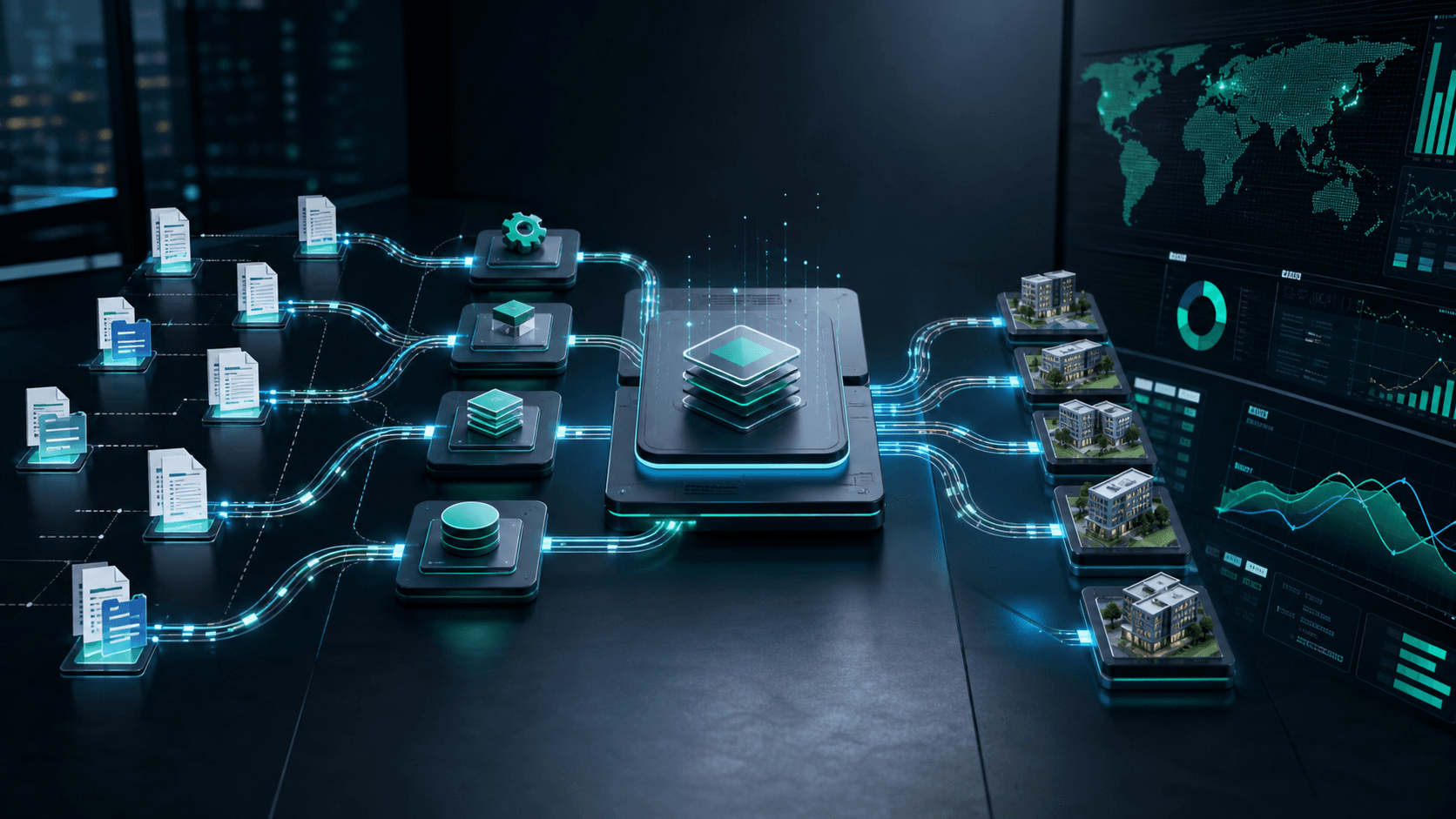
What AI means in property operations
In property operations, AI is most useful as decision support: summarizing records, finding exceptions, comparing trends, drafting reports, and helping managers ask portfolio-level questions. It should not be treated as an autonomous property manager or a replacement for policy, judgment, tenant communication, or accountable approval.
Property operations are becoming more data-driven
Many property teams already hold useful data across rent records, tenant interactions, maintenance requests, access workflows, lease dates, arrears notes, and service history. The next operating shift is connecting that information into dashboards and decision support rather than leaving it scattered across spreadsheets, messages, and manual files.
Portfolio-level questions AI can support
A well-governed AI layer can help managers ask which properties have rising arrears, which units have repeated maintenance issues, which tenants need follow-up, what changed since the last report, and where data is missing. These answers should be traceable to operational records and reviewed by a responsible user before decisions are made.
AI-assisted reporting and executive dashboards
AI-assisted reporting is strongest when it sits beside dashboards for rent performance, arrears, occupancy, maintenance backlog, access activity, resident requests, and service-level indicators. Executives need concise summaries, but they also need the ability to drill into the source records behind a recommendation or exception.
Tenant predictability and arrears visibility
Tenant predictability should be framed carefully. Payment patterns, late-payment frequency, unresolved issues, lease events, and communication history can help teams prioritize review, but they do not guarantee future behavior. Managers still need fair process, context, and human oversight when deciding how to follow up.
Maintenance trend analysis
Maintenance data can reveal recurring issues by property, unit, asset type, supplier, category, or response time. AI can help summarize patterns and flag repeated unresolved work, but the operating value comes from clear assignment, status updates, tenant communication, closure evidence, and historical reporting.
AI works best when the operating model is clear
AI can support tenant insights, reporting, exception detection, reminders, and portfolio questions, but it depends on clean data definitions, stable workflows, access controls, and human review. This is where responsible AI governance matters: teams need to understand what AI can suggest, what managers must approve, and how decisions are tracked.
Dashboards turn AI into management action
Useful AI in property operations should not stop at chat responses. It should connect to dashboards, arrears views, maintenance backlogs, occupancy trends, tenant predictability, and service-level indicators so managers can see what requires action and whether follow-up is improving performance.
What AI should not automate without controls
AI should not independently approve evictions, impose penalties, alter tenant balances, change lease terms, approve sensitive access decisions, or make final supplier and resident-safety decisions. Those workflows need defined authority, audit trails, evidence, and human review.
Practical readiness checklist for property managers
Before adopting AI, property teams should confirm that properties, units, tenants, leases, invoices, receipts, maintenance tickets, access records, and user roles are structured consistently. They should also define who can ask AI questions, what data is excluded, how outputs are reviewed, and how errors are corrected.
ElgonOS as a practical example
ElgonOS reflects Elgon Edge's product engineering, data, AI, automation, and governance capability in a real operating domain. For detailed ElgonOS features, pricing, and access, visit the standalone ElgonOS platform site.